Sweden needs a new Afghanistan policy
Sweden’s policy of disengagement has not improved the situation in Afghanistan, but it has limited Sweden’s ability to influence developments.
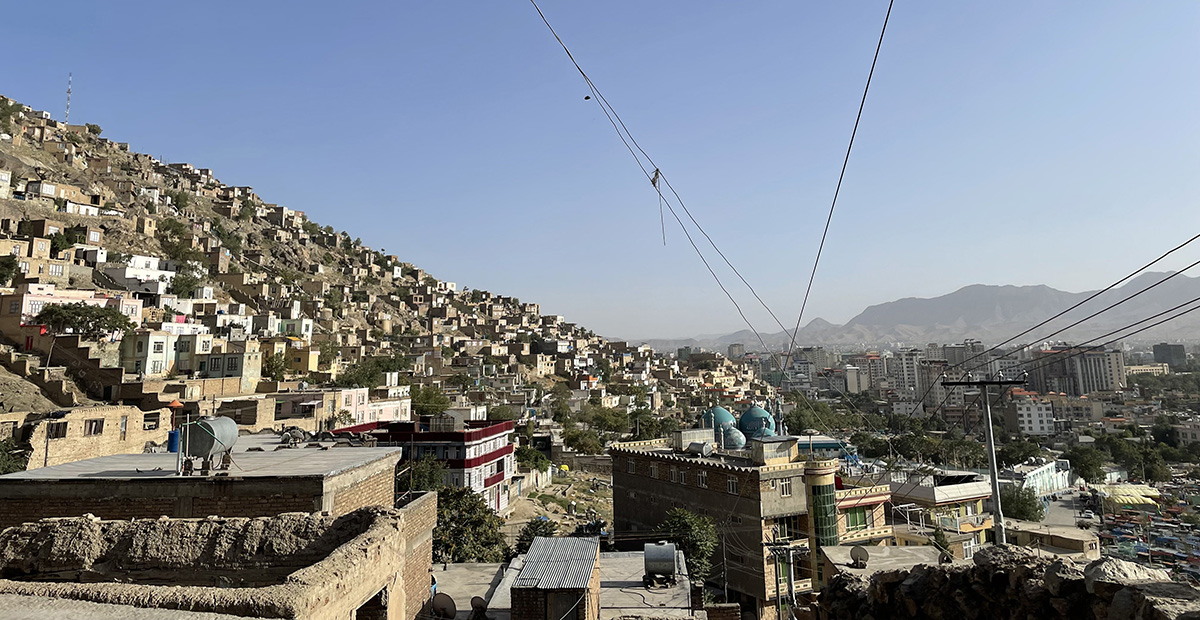
Sweden can stand firm on its principles while engaging in dialogue, Afghanistan experts and former ambassadors argue in an op-ed in Svenska Dagbladet.
August 15 marks five years since the Taliban regained power in Afghanistan. During these years, the rights of women and girls have been dismantled on an unprecedented scale. The country is facing a prolonged and deep humanitarian and economic crisis rooted in decades of conflict.
It is time to acknowledge an uncomfortable reality: the Taliban control Afghanistan and are likely to do so for the foreseeable future. Turning a blind eye to this does not change the situation for the Afghan people, least of all for girls and women. The question we must address is how best to support the Afghan people, regardless of who governs the country.
Since 2021, the Swedish government has chosen a clear policy of disengagement. The embassy has been closed, development assistance has been phased out, and until recently the government opposed any form of dialogue with the Taliban. At the same time, Sweden maintains diplomatic relations with a number of regimes whose values we strongly reject, such as Russia, Iran and North Korea, without this being perceived as support for their systems of government. Sweden’s diplomatic relations are based on long-term and strategic considerations.
While the Swedish government has actively chosen to turn its back on the Afghan people, conditions for people in the country are deteriorating. They are suffering not only from the Taliban’s human rights violations, particularly against women and girls, but also from a sanctions regime and severe cuts in international support. Afghanistan is extremely vulnerable to climate change, drought and water scarcity, and 51 percent of the population is food insecure. The large number of people returning from Iran and Pakistan – a staggering 6 million since 2023, equivalent to roughly one-sixth of the country’s population – is placing enormous pressure on already weak public services, drastically reduced international aid, and scarce livelihood opportunities.
A year ago, the Minister for Foreign Affairs stated: “Sweden not negotiating with the Taliban does not mean that we are abandoning the Afghan people.” Yet the government still owes the Afghan people an answer as to how Sweden intends to stand by them going forward. Despite the difficulties, we see many opportunities for support.
Several Swedish organisations support efforts in Afghanistan in areas including education, maternal healthcare, agriculture, access to water and livelihood opportunities – not least for people who have returned and the communities in which they now live. For such efforts to contribute to more sustainable, long-term results, they need to go hand in hand with diplomacy and dialogue aimed at achieving lasting and structural change.
The international community cannot turn its back on Afghans – neither for their sake nor for our own. This is not about legitimising the Taliban. Dialogue can take place without formal recognition. The UN and EU, as well as several Western countries, are doing precisely this – while Sweden is absent.
In June this year, however, Sweden took part in a meeting on deportations between European officials and representatives of the Taliban regime in Brussels. It is equally important that dialogue be broadened to other areas of interest to Sweden and areas where support for the Afghan people is needed, including human rights, climate, security and stability, as well as the broader issue of migration.
Sweden needs to re-establish a more coherent Afghanistan policy. Diplomacy, development assistance and humanitarian support must work together. The alternative is for Sweden to continue to stand on the sidelines while other actors fill the vacuum. Russia is the only country to have recognised the Taliban government, while China is gradually strengthening its relations with the country. The less present democratic states are, the less influence they have.
Sweden should remain firm in its principled position, but principled policy must not be confused with passivity. Refraining from dialogue has not improved the situation for the Afghan people. It has, however, limited Sweden’s ability to influence developments. Diplomacy, together with civil society both there and here, should continue to be seen as tools for influencing developments and defending interests in relationships where differences in values are greatest.
TORBJÖRN PETTERSSON, Chair, Solidarity Committee, former Ambassador (Afghanistan 2010–2012)
SVANTE KILANDER, former Ambassador (Afghanistan 2008–2010)
PETER TEJLER, former Ambassador (Afghanistan 2002–2003)
DAG JUHLIN-DANNFELT, Ambassador (served in Afghanistan 2000–2005)
ULLA ANDRÉN, former Ambassador
BÖRJE LJUNGGREN, former Ambassador
TORVALD ÅKESSON, former Ambassador
ANNETTE LYTH, former Head of UNAMA’s field office in Kabul (2023–2025)
TOMAS NIKLASSON, former EU Special Envoy for Afghanistan (2021–2025)
METTE SUNNERGREN, EU Ambassador (served in Afghanistan 2008–2009, 2017–2018)
MARGARETA WAHLSTRÖM, former Special Representative of the UN Secretary General for Disaster Risk Reduction
LENA HJELM-WALLÉN, former Minister for Foreign Affairs (S)
LOTTA HEDSTRÖM, former Spokesperson (MP)
DAG KLACKENBERG, former Member of Parliament (M) and Ambassador
MARIA LEISSNER, former party leader (L) and Ambassador
OLOF GRANANDER, Colonel, Commander of the Swedish military mission in Afghanistan in 2009
ANDERS FÄNGE, former Country Director, Solidarity Committee
KAJSA JOHANSSON, Secretary-General, Solidarity Committee