“Our daughters are like birds without wings”
September 17 marks five years since the Taliban regime closed schools to girls from the seventh grade. Since then, 2.6 million girls have been shut out from education beyond primary school. Fifteen Afghans share their perspectives on what the ban means – for them and for the country.
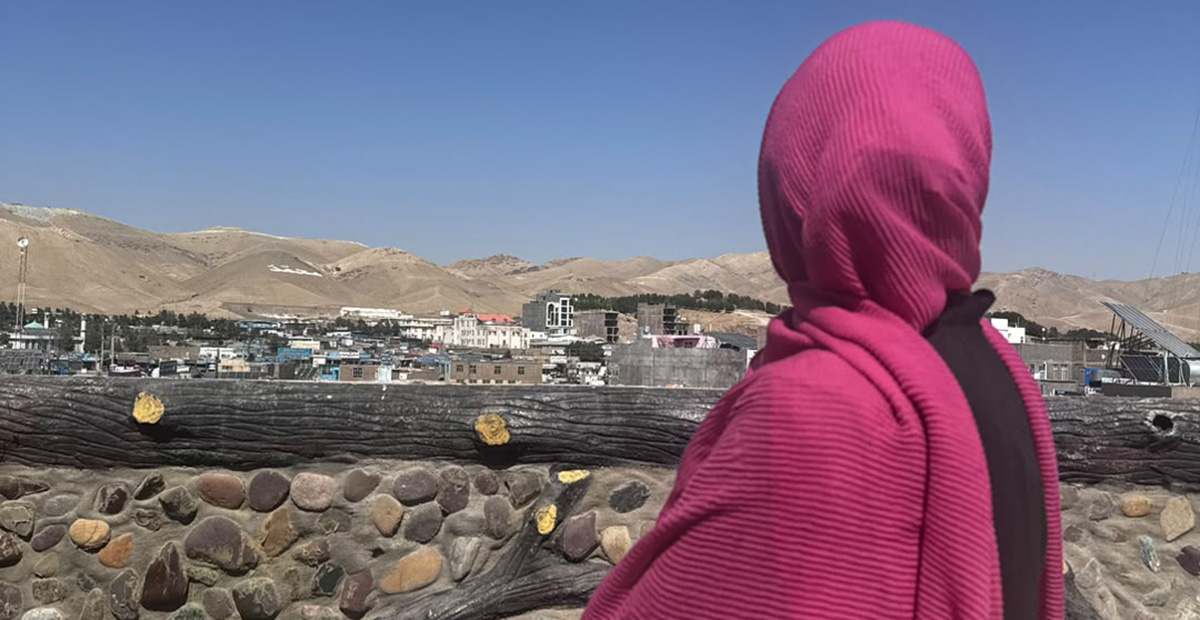
“As a psychologist, I can say the ban on girls’ education is not just about denying them knowledge, it has left many young girls deeply depressed. They feel isolated, hopeless, and fearful of what the future holds. Instead of dreaming about school and opportunities, they live with constant anxiety and sadness, unsure if their lives will ever change. Each day without education adds to their sense of loss, and the fear of being trapped in a life without choices grows stronger. Most of my clients say that the classroom was not only a place of learning but also a source of joy, friendship, and hope but now replaced by silence and uncertainty.”
♀ Rezwana Rahimi, psychologist, Balkh
“The ban on girls’ education is a tragedy for our nation. It is worse than anything our worst enemy could have done to us. If a man is educated, it’s one person. If a woman is educated, it’s one plus the number of children she has. An educated woman can change a lot of things.”
♂ Adel, 71, architect, Kabul
“I am very happy that I can go to school, study, and meet my classmates and friends. But when I remember that next year I will be in grade 6, the last grade I can attend, I feel very sad. I hope the situation changes so that I can continue my education. If it does not, I may have to go to a madrasa (religious school), but I am still disappointed because it would not give me the certificate I need to continue my higher education.”
♀ Wesal, 10, grade 5, Kabul
“The ban is one of the most concerning issues currently in our society. I strongly believe that this ban can be one of the main reasons behind the ongoing political crises and economic challenges. When half of the population is denied access to education, the country loses a significant part of its human resource, which can have serious consequences for Afghanistan’s long-term development and stability. Personally, my family has been affected by the ban on girls’ education, like many other families across the country. My younger sister was not allowed to attend university after completing high school, even though she is a talented and ambitious young woman. As a man and a brother, I feel deeply uncomfortable and saddened by what is happening to my sister’s educational aspirations. I also feel guilty that I have not been able to bring positive changes to this situation.”
♂ Rafiullah, Uruzgan
“Five years ago, I was studying and dreaming about my future. I had already chosen what I wanted to study at university. Then suddenly, everything changed. The ban took away my chance to continue my education and made my future uncertain. Now I study high school online. I still hope that one day I can continue my education and build the future I dreamed of, but the dreams that were taken away from me will always remain in my heart.”
♀ Drukhshan, 16, Kabul
“I am not very interested in education for girls. It is not possible economically for poor people like us to send our girls to school. It would be very difficult to let them complete their education.”
♂ Shams ul Rahman, 27, unemployed, Kunduz
“It is painful to see that, over the past five years, Afghan women have lost rights that women around the world enjoy as basic and essential rights. These restrictions have taken away the opportunities of a girl whose only way of overcoming the hardships of life was through education, and of a student who wanted to become a doctor or engineer in her village after completing her studies. And for me, who had only one semester left to complete my master’s degree. Ultimately, these restrictions render meaningless all the efforts that society has invested millions of dollars in to provide education, employment and skills development for Afghan women affected by the war. It means that half of my city and my country has been paralysed.”
♀ Horeya, 27, artist, Herat
“Our daughters are now like birds without wings – wanting to fly but they cannot!“
♀ Sharifa, 65, Kandahar
“This ban, which has no Islamic justification, has had a major impact on my life. If it had not been imposed, I would have graduated from grade 12 by now and continued my education in a field of my choice. Instead, I have been deprived of my right to education. It makes me feel very upset and discouraged. It is difficult when you are unable to make choices about your own future and live the life you had planned for yourself. Afghan girls should be given the opportunity to continue their education and pursue higher studies so that they can achieve their goals and contribute to society.”
♀ Laiba, 18 years, Ghazni
“The ban has affected not only me but also many of my classmates and friends. After finishing grade 12, I hoped to study in the health field and help support my family. Now, that dream feels far away. It has affected me deeply. I often feel isolated. I study at home together with other girls in my family, we listen to education programmes on the radio, but it is not the same as going to school. Permission to education must be granted as soon as possible. Time continues to pass, but my education has come to a stop. At my age, I should be studying at university. This makes me worried about my future and the opportunities I have missed.”
♀ Sher-bano, 21 years, Ghazni
“I see this as a generational loss for Afghanistan. This ban will undoubtedly set Afghanistan back significantly. We are now in the fifth year of ban and an entire generation of Afghan girls has been deprived of education. The consequences will become increasingly apparent in coming years. From what I have seen and heard from people around me, many girls are struggling with severe depression, chronic stress, trauma-related symptoms, hopelessness, social isolation, a deep sense of frustration and a lasting loss of self worth and sense of purpose because they are being denied education and the chance to build their own future. It honestly hurts me to see this happening while feeling powerless to change it. I feel indebted to them because they deserve education and basic human rights, yet I cannot do enough to help them. I truly hope that one day every woman and girl in Afghanistan will have the chance to learn, study, work, and build the future she wants for herself and for the country. I hope that day comes sooner rather than later.”
♂ Jamshid, Kabul
“The ban on girls’ education is like a tsunami – it will destroy generations to come!”
♀ Malalai, Kandahar
“Education is a right for everyone. Both boys and girls should study, as education shapes a person’s personality, thoughts, and lifestyle. It has been five years since the Taliban banned girls from education. Society will lack women doctors, and eventually, there will be no educated mothers. My sister was in sixth grade. She wanted to become a doctor. She studied hard. She had dreams. We always worked together. After schools were banned, she became depressed. Over time, she lost all her hope. Now she does not even think about education. She wants to leave this country for a better life. It really hurts me. I cannot do anything for my sister and all the girls. They are all in a difficult situation. They cannot study or work. They cannot go anywhere they want. To make a long story short, they have been banned from normal life.”
♂ Basir, Kabul
“As human beings, girls should have the same rights as boys. The girls of today are the mothers of tomorrow. That the government has banned girls from accessing education is very sad and unacceptable. If the girls of today do not receive an education, it means that the mothers of tomorrow will enter society without an education. An uneducated mother cannot properly guide or educate her children in a way that enables them to serve and contribute positively to society. We have waited for a very long time for the doors of education to be reopened for girls. As a father, I suffer from this situation every day. For five years now, our children have been waiting to hear the school and university bells again. This wait has become unbearably long and prolonged. We strongly urge the current authorities to make the reopening of educational opportunities for girls a top priority. Illiteracy is darkness, and half of Afghanistan’s generation is growing up in that darkness. This ban is pushing Afghanistan further into darkness. Education is like a lamp that illuminates the path, but today that lamp has been extinguished. “
♂ Yar Mohammad, 43, agriculturalist, Logar
“I believe girls have the same right to education as boys. In Islam, seeking knowledge is encouraged for both men and women, so education should not depend on gender. Educated girls can build their own future, become independent, and use their knowledge to contribute to Afghanistan. The ban has affected not only girls and their families, but also the whole community. Afghanistan needs educated women in many fields, especially healthcare, where female doctors and specialists are necessary for treating female patients in situations where they cannot be treated by men. Education also affects the next generation because children spend a large part of their early lives with their mothers, and educated mothers can have a strong influence on their children’s thinking, education, and development. Seeing girls lose their education and their future opportunities makes me sad and concerned about the future of our society.”
♂ Emal, Panjshir