Hard pressure on a fragile society as millions return
Migration has played a major role in Afghanistan for a long time. After the Soviet invasion, more than half of the population left the country.
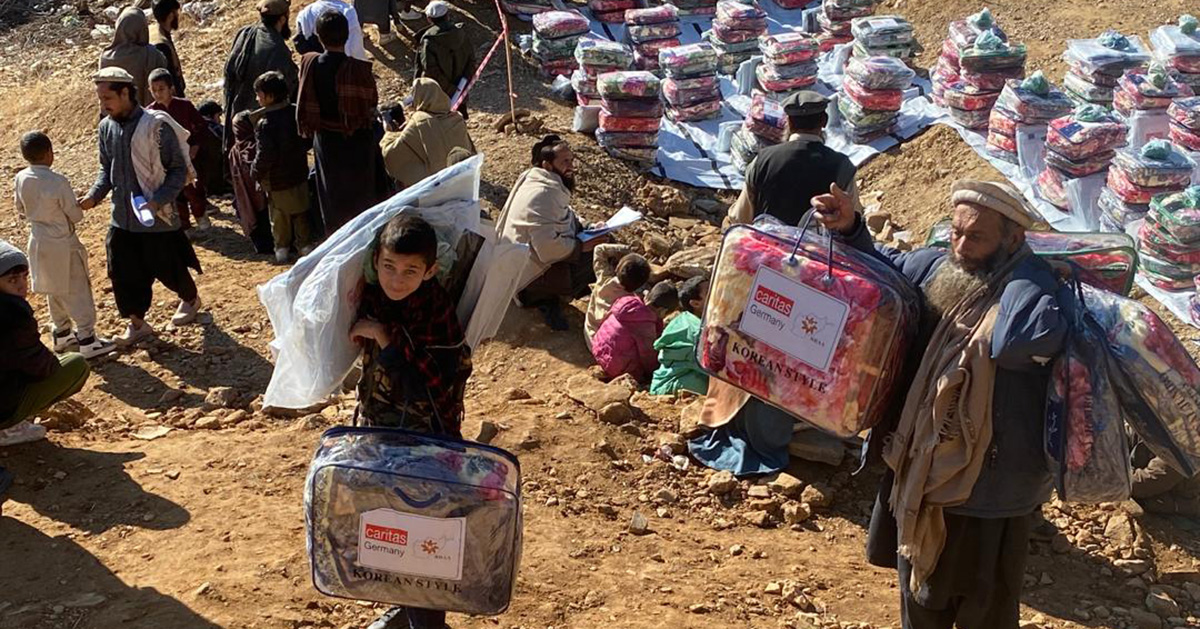
Now that Iran and Pakistan are forcing millions of Afghans back, this is placing severe pressure on an already fragile society. At the same time, the number of internally displaced people is increasing due to extreme weather events.
“The situation is very bad and depends on several factors. A large number of people, many of whom have never lived in Afghanistan, are being forced into the country at the same time as a severe economic crisis is ongoing and the Taliban have a limited capacity to provide livelihoods for returnees,” says Florian Kühn, a peace and conflict researcher at the University of Gothenburg with a focus on Afghanistan.
During 2025, 2.8 million Afghans were forced to leave Iran and Pakistan. More than four million Afghans have been forced to leave Iran and Pakistan since mass deportations began in the final months of 2023. Nearly half of them arrived between March and April 2025.
“Most arrive with nothing and without access to social and economic networks they can turn to in Afghanistan, which makes them extremely dependent on humanitarian assistance. Their most urgent needs are shelter, legal assistance, and cash. Needs increase dramatically during the winter months,” explains Jacobo Caridi, Country Director for the Norwegian Refugee Council (NRC) in Afghanistan.
He points out that the humanitarian situation in Afghanistan is severe. An estimated 21.9 million Afghans, about half the population, are expected to need humanitarian assistance this year.
Accected by climate change
Afghanistan is one of the countries most severely affected by the impacts of climate change. Devastating floods have forced many Afghans to leave their homes. At the same time, the country has been hit by several major earthquakes.
“Reduced aid has limited the scale of assistance at a time when needs are increasing. These overlapping crises have created acute and multilayered vulnerability, particularly among internally displaced people and those who have recently returned,” emphasizes Jacobo Caridi.
The United States has withdrawn virtually all aid to Afghanistan, while assistance from other countries is also declining. In 2024, the U.S. accounted for over 40 percent of all foreign aid to Afghanistan.
NRC delivers humanitarian assistance at three locations for returnees near the borders with Iran and Pakistan: Islam Qala, Torkham, and Spin Boldak.
Citizens Organization for Advocacy and Resilience (COAR), as an Afghan national nongovernmental organization, also operates programs for returnees. Abdul Rahman Shirzad is the Food Security and Livelihood Program Manager. Many of those returning no longer have any connection to their original hometowns in Afghanistan and therefore lack the necessary contacts needed to find work and housing in a country where unemployment is already high. As a result, he says, many move to larger cities.
“Many families have not been in Afghanistan for 30–40 years. The land and houses that they once owned are now destroyed or converted to uncultivable land, or some of them are inhabited by others. They have no jobs and no assets. Women are particularly vulnerable and risk being marginalized, as they face even greater difficulties in finding employment.”
Short term
He explains that much of the assistance provided to returnees is emergency-based and short-term and it’s not enough for longer. COAR also provides short-term support, such as cash assistance, but also runs programs including vocational training and launching community-based education programs and WASH facilities.
“UN agencies UNHCR and IOM distribute cash, but it is not enough. It is impossible to support all the millions arriving from Iran and Pakistan. They receive assistance in transit centers and camps for one to two months; after that, they face many difficulties. If we do not support returnees, we will see a second wave of internal displacement,” says Abdul Rahman Shirzad.
He notes that it is difficult to secure donor funding for the long-term interventions that are needed when funds are insufficient, even for the most urgent needs.
The Taliban authorities have distributed some land to returnees in some provinces, but Abdul Rahman Shirzad explains that returnees cannot afford to build houses on the land, and that there is a lack of water and infrastructure since some of the land is located in very arid areas.
Migration has played a significant role in Afghanistan for several hundred years, both within and beyond the country’s borders, often as a way to secure livelihoods. However, it was after the Soviet invasion in 1979 that millions of Afghans – more than half the population – fled to neighboring Pakistan and Iran. This led to one of the world’s largest refugee crises, one that is still ongoing.
Many returned when the Soviets left Afghanistan in the early 1990s. But a few years later, a brutal civil war broke out among different factions of the resistance movement, and people began fleeing the country again.
Once again, many returned when the Taliban lost power following the U.S. invasion in 2001, but as the war intensified, people fled their homes, both abroad and to other areas within the country.
Difficult to return
After the Taliban takeover in 2021, the number of new conflict-related internally displaced people dropped sharply. Nevertheless, 4.2 million people were still internally displaced for conflict-related reasons in 2024 – the fifth highest figure in the world. This indicates that it remains difficult for displaced people to return to their places of origin.
What has increased, however, is the number of people fleeing their homes due to various natural disasters, some of which are caused by climate change. Most flee because of floods that destroy infrastructure, crops, and livestock. By the end of 2024, 1.3 million people were internally displaced due to natural disasters – the highest number in the world.
Many Afghans have fled their country due to war and violence, but a large number have also left in search of livelihoods. The demand for labor in Pakistan and Iran has been high since the 1970s, and Afghans were welcomed. Before the Soviet occupation, hundreds of thousands of Afghans lived in Iran. In 2022, a census showed that 2.6 million Afghans lived in Iran, with an additional estimated 500,000 unregistered. In Pakistan, around 2 million documented Afghans were estimated to be living there in 2025, along with another 1.3 million undocumented individuals.
The money sent home by Afghans abroad, both in neighboring countries and in more distant countries such as those in Europe, through formal banking systems was estimated to account for about 4 percent of GDP before 2021. However, since most people use informal systems to transfer money, it is difficult to assess the true volume.
SAK’s latest policy brief by Johan Shaar and Andreas Stefansson focuses on migration. They conclude that migration within and from Afghanistan is both extensive and complex. People move for different reasons, voluntarily or by force. One recommendation is that a regional, comprehensive approach is required, in which international actors, authorities, and civil society work together. Organizations that protect and support Afghans across borders need long-term support.
They also conclude that the millions of people forced to return to Afghanistan or flee within the country live under extremely insecure conditions. Another recommendation is that the situation requires long-term interventions where people live, as well as investments in climate adaptation and access to international climate finance.
EVA KELLSTROM FROSTE
More on theme migration:
The returnees are starting from scratch – and worry about the children’s future