Women-led Business a way to employment – and meaningfulness
A growing number of Afghan women are starting small-scale businesses to earn an income.
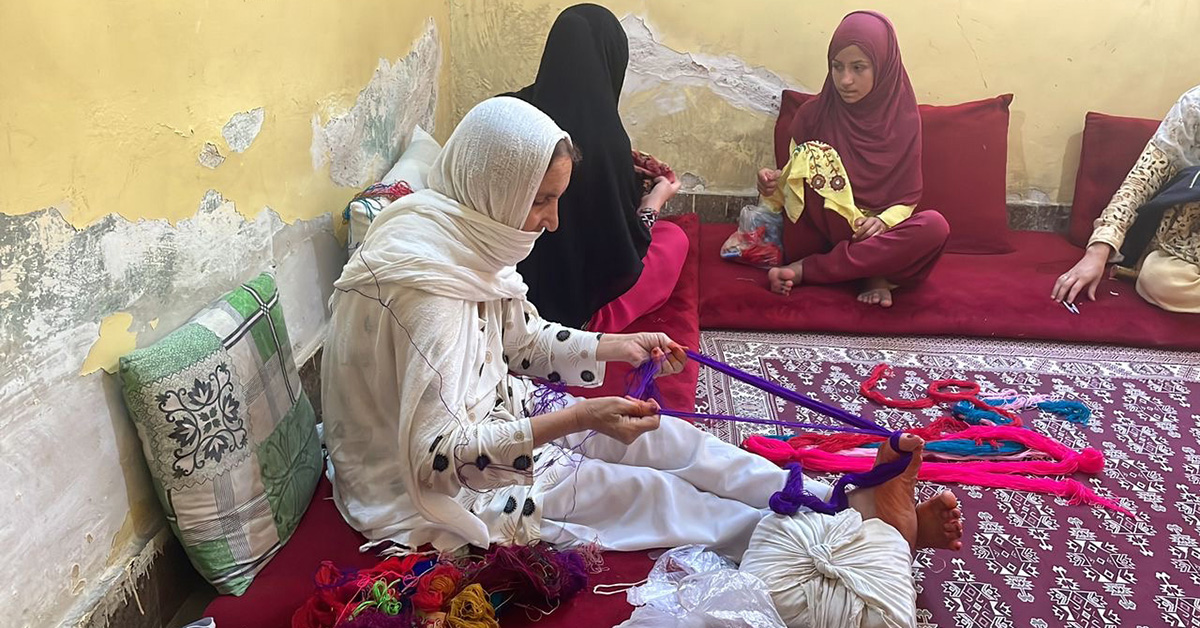
Despite the Taliban’s myriad restrictions on women’s lives, an increasing number of women are working. Partly due to economic hardships, but also, because the opportunity to run a business, registered or informal, offers a sense of meaning at a time when education and much of public life is closed to women.
In a recent, comprehensive report, International Crisis Group maps the opportunities available to women and shows why many are increasingly turning to the private sector rather than to sectors that were previously more accessible. Funding cuts and tighter restrictions have reduced opportunities within NGOs and the UN, while more frequent natural disasters have made agricultural livelihoods increasingly unreliable. At the same time, public sector jobs are both insecure and poorly paid.
At first, the political and economic upheaval that accompanied the Taliban’s return caused many women-led businesses to close permanently or temporarily. But since the initial post-takeover shock, small enterprises have stayed largely unregulated. Entrepreneurship and employment in women-led businesses, many of them home-based, have become windows of opportunity for women looking to participate in the work force.
Aligned with cultural norms
These lines of work are well aligned with cultural norms that strongly disapprove of women working outside the home. “It is common among Afghans that women should stay at home and should have nothing to do with work or outside [the home]”, noted an interviewee. “Only some families encourage their daughters to break these taboos”.
The majority of the new business activities tend to conform to traditional gender norms – they range from producing homemade jams, pickles and sweets to making engravings, paintings and furniture. Women involved in registered small businesses and handicrafts have joined trade fairs arranged under the auspices of the Ministry of Commerce and Industry. The Ministry said it has issued 10,000 licences to women entrepreneurs in the past three years, a fourfold increase from pre-takeover levels. The actual number of women-led businesses is likely much higher, however, as this data excludes women who are working informally without having applied for one and those who have businesses nominally registered in the name of male relatives but which are in fact run by women – a workaround some Afghan women have chosen to avoid the need to interact with the authorities.
Women’s ability to make money has given many of them a much-needed psychological boost. The rise in women-led entrepreneurship has also led to the creation of jobs for other women, and women-owned businesses have become the largest employer of women in the private sector. One reason that male-owned business hesitate to hire women is that they find the requirement for gender-segregated offices to be cumbersome, particularly because running afoul of the rules could lead to fines or temporary closure.
Online platforms
To market their products, the majority of businesswomen Crisis Group spoke to said they largely relied on online platforms, including Instagram, which help blunt the impact that restrictions on their mobility have on cultivating a client base.
Businesses that are run exclusively from home are not required to register with the authorities at present. According to the Ministry of Economy spokesperson, an estimated 250,000 Afghan women are involved in the informal sector, either running their own businesses or working for others. A senior Taliban official told Crisis Group that even businesses that have been shuttered, such as beauty salons, have been allowed to operate from residential premises, with authorities turning a blind eye to their activities.
Allowing women to work informally may represent a sort of compromise within the Taliban movement, one that satisfies its conservative base while still allowing women to form part of the country’s economic life. There are benefits to operating in the shadows, particularly given the strictures the Taliban have imposed on women: owners of non-registered businesses can escape interactions with sceptical officials to obtain licences, as well as costs related to taxation or renting of business premises. Many women entrepreneurs also prefer not to be visible because they fear a sudden influx of women entrepreneurs might animate Taliban hardliners to shutter entire sectors.
Informality also carries risks, however, and stunts the capacity of these businesses to grow, as using commercial property, adding staff and getting access to finance, grants or technical assistance remain difficult without formal registration.
Action on numerous fronts will be needed to bolster women’s businesses, including efforts to soften or scrap a multitude of government restrictions, as well as steps to address the difficulty of marketing or establishing value chains, lack of access to international markets and the inexperience of many business owners in running private companies.
Chink of light
The international campaign aimed at convincing the Taliban to relax their stringent controls on women’s lives has so far proven a resounding failure. But when it comes to women’s right to work and run a business, there is a chink of light.
Support for the private sector is a central theme of the Doha process, which has brought together the Taliban, foreign governments and the UN for discussions on how to reintegrate Afghanistan in the global political system. These talks offer a unique opportunity for foreign states and multilateral institutions to find common ground with the de facto authorities, with support for women-led businesses standing out as an area of potential agreement.
For international donors, targeted support for women entrepreneurs through training on business management, development, marketing and digital literacy remains one of the few viable ways to sustain women’s livelihoods amid the current political constraints.
Enabling women in Afghanistan to work and earn a living is not panacea for all they have lost under Taliban rule. But so long as Western outrage about gender-based inequities is falling on deaf ears in Kabul, a degree of consensus between the Taliban and foreign states around women’s role in private enterprise may give some practical relief and a glimmer of hope for the future.
INTERNATIIONAL CRISIS GROUP
Translation and editing by Cajsa Wikström
The text is a shortened version of the report “A Precarious Lifeline? Women-led Business in Afghanistan”, published on the website of International Crisis Group